01 · Tilt + turn
Tilt for air. Turn for access.
One handle moves the sash from secure top ventilation to a full inward opening.
Innotech's exclusive Ontario distributor
Many windows can post a respectable energy rating. Far fewer publish the NAFS ratings that show the stress test results.
See the engineering move
See how tilt + turn ventilation works and how a large lift + slide panel slides. Real demonstrations, reframed around the movement that matters.
Air leakage. Driven rain. Structural pressure. When energy values look close, NAFS helps show how strongly the complete window is built.
AW testing does not stop at a brand-new window. The unit is operated repeatedly, cycled through temperature changes, then checked again for air, water and operating force. That is durability QA, not a one-time score. Defender 76TS reached AW-PG85 fixed and AW-PG90 tilt + turn.
AW-PG85 / 90
AW-PG85 fixed · AW-PG90 tilt + turn. Test pressures roughly comparable to 294 and 302 km/h winds—in plain terms, architectural-class strength built into a residential window system.
Hotels, universities, multi-storey housing and coastal resorts prove the engineering at scale. Haven Haus brings that same discipline into a window package designed for the house.


A low U-value matters on day one. Heavy-duty frames, multi-point hardware, welded corners, and repeat weather testing are what help the window stay tight and operate smoothly through years of use.
Start with 76TS for practical high performance. Step up to 88PH+ when Passive House certification, the site or the envelope target gives you a reason.
Compare the Defender systems
Both are made by Innotech. The difference is how far the energy brief needs to go. Open either system for the practical distinction.
Most Ontario homes
High-rise-grade durability without over-specifying the project.
The system most Haven Haus clients choose: strong NAFS performance, tilt + turn operation, and double- or triple-glazing flexibility at a mainstream project price.
Certification-led projects
When Passive House certification or the coldest sites set the brief.
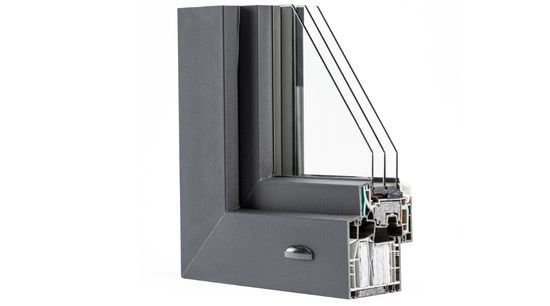
88PH+ Pro covers cool-temperate Passive House targets; 88PH+ XI is certified for cold climates. Both use an insulated 88 mm frame and triple glazing.
●Most homes start with the 76TS. Certification or the coldest sites step up to the 88PH+.
The system most Haven Haus clients choose: strong NAFS performance, tilt + turn operation, and double- or triple-glazing flexibility at a mainstream project price.
Virtual showroom
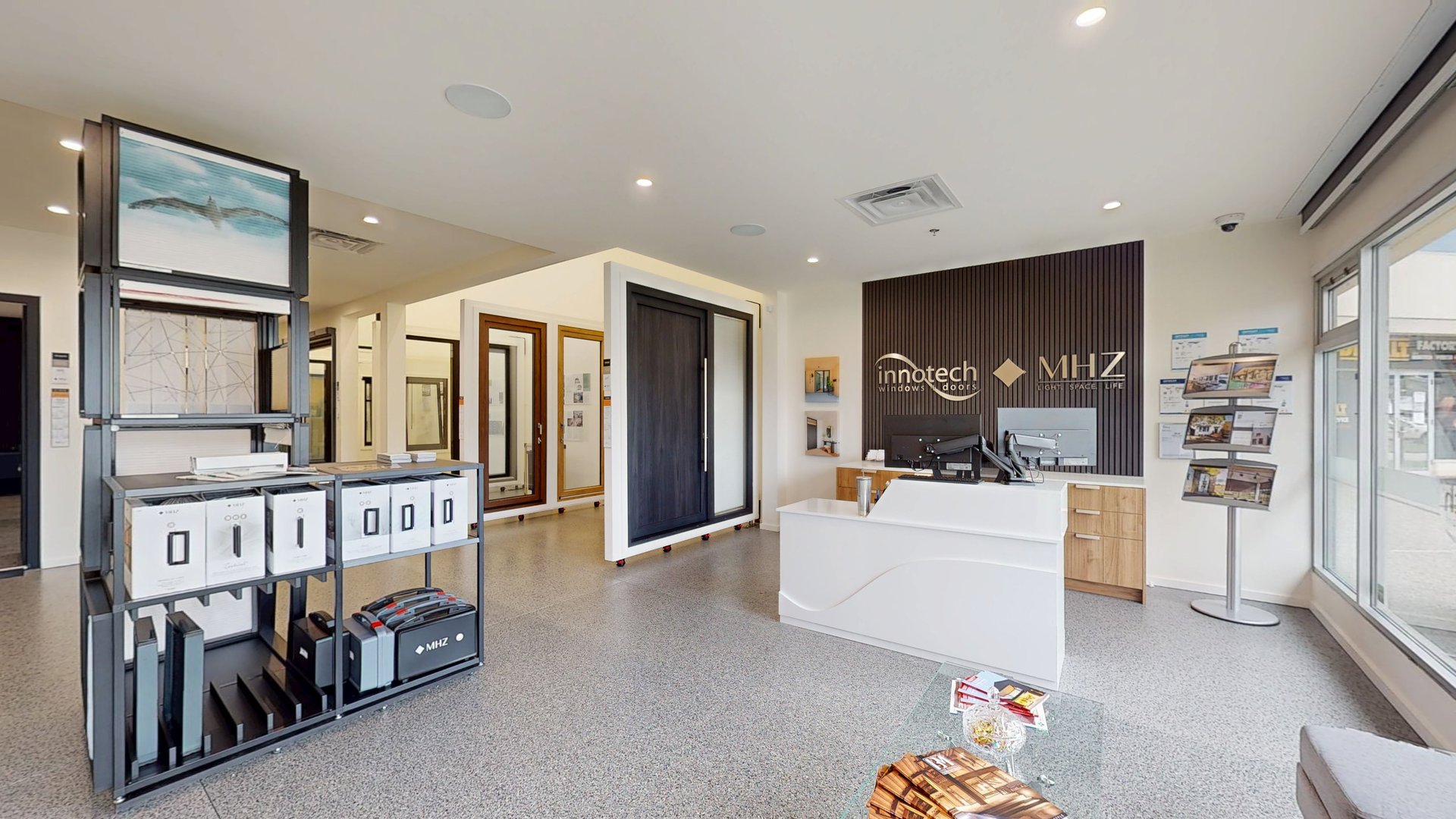
Move through the Innotech Design Centre, inspect sightlines, and compare window and door configurations from room to room. The interactive tour loads only when you choose to enter it.
Open any system for its measured details. Tap it again to minimize.
Scroll sideways for all systems →
| Metric | Defender 76TS | Defender 88PH+ Pro | Defender 88PH+ XI |
|---|---|---|---|
| Thermal transmittance (Uw, W/m²K)Heat lost through the whole window — lower is better. | 0.80–1.20 | 0.74–0.86 | 0.69–0.80 certified 0.59 fixed / 0.60 operable |
| Passive House InstitutePHI certifies by climate zone. The cold zone covers harsh Canadian climates; few systems made in North America qualify. | Net-Zero Energy Ready Frequently specified for Passive House projects not pursuing certification | Certified — cool-temperate (phA fixed / phB operable / phC terrace door) | Certified — cold climate, class phA #1793 / #2030 |
| Airtightness (tested)No measurable air leakage through the assembly at test pressure. | 0.00 CFM/ft² | 0.00 CFM/ft² | 0.00 CFM/ft² |
| Glazing | Double or triple | 46 mm triple | 46 mm triple |
| Frame | 76 mm uPVC + steel hybrid | 88 mm hybrid, insulated core | 88 mm hybrid, insulated core |
| Best for | Everyday high-performance builds | Passive House & net-zero projects | The coldest sites and the strictest energy targets |
Sources: Innotech performance data; Passive House Institute component database. Certified values are specific to fixed or operable configurations.
Numbers first. Now see them in a room.
Explore homes and buildings that put high-performance window systems into real architectural settings.
Project imagery can include work outside Ontario. Locations below are shown as recorded in the project library.
 Featured project
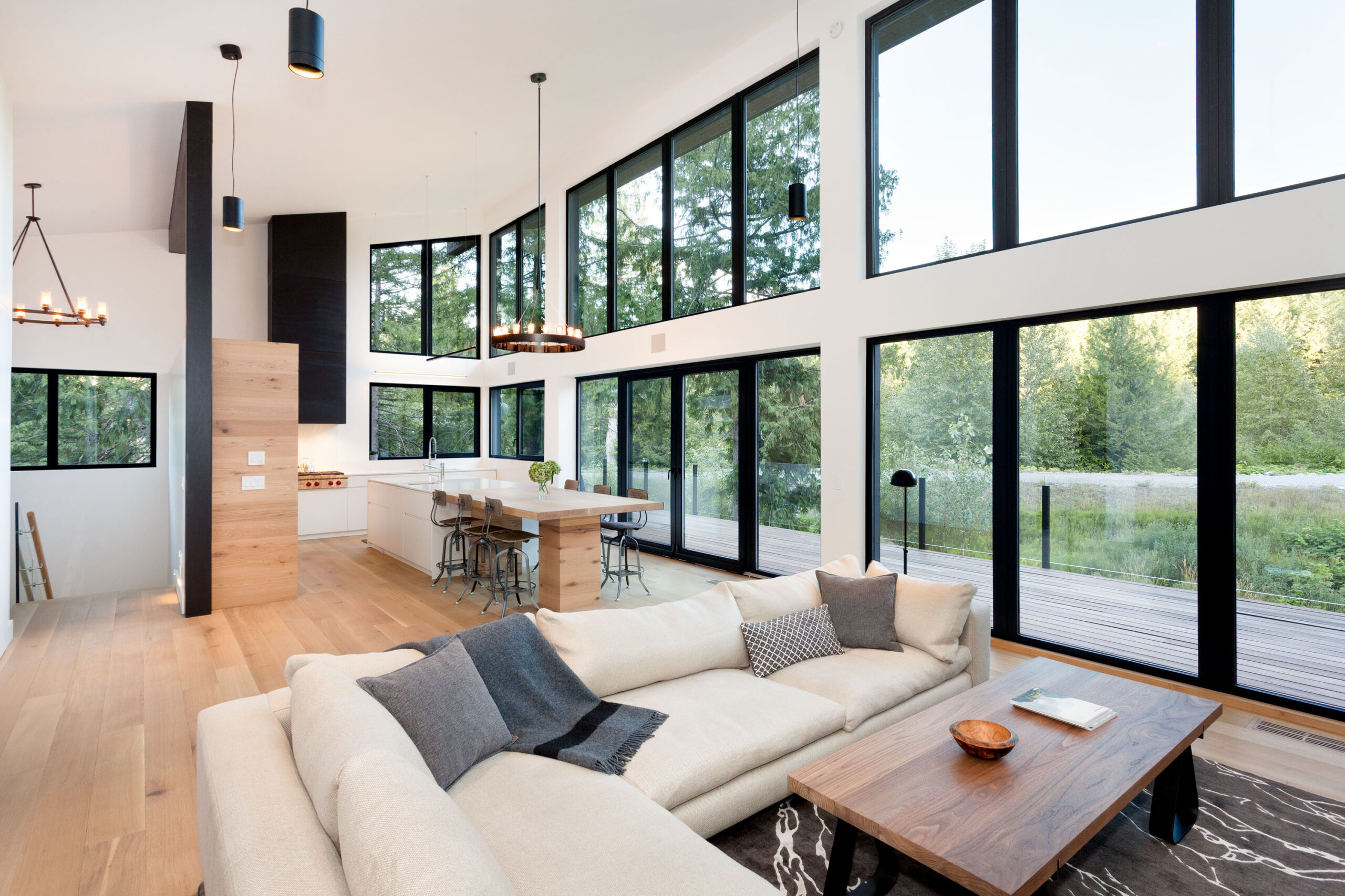
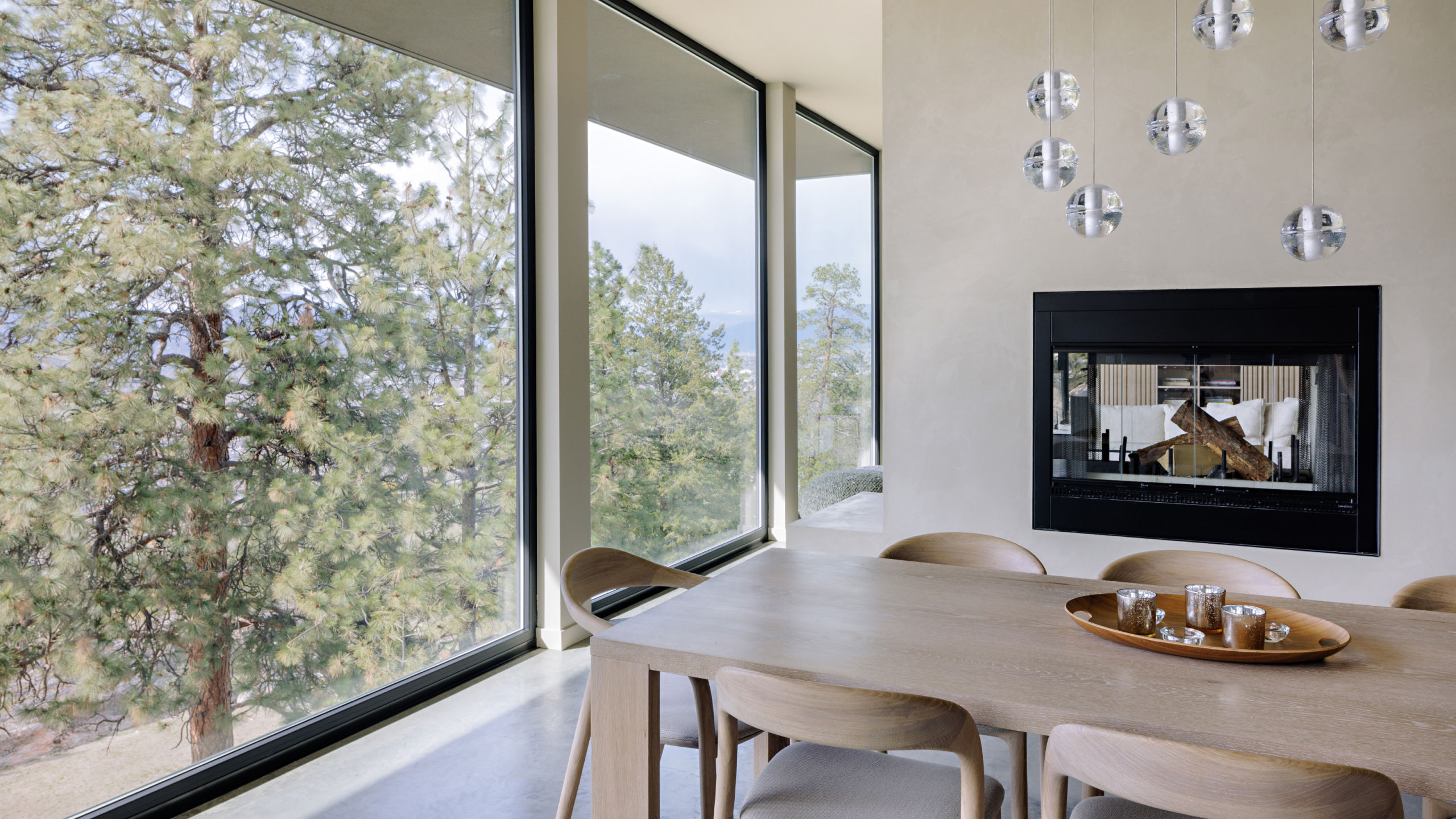
LocationNicola Lake, British Columbia
project
 Project · 02
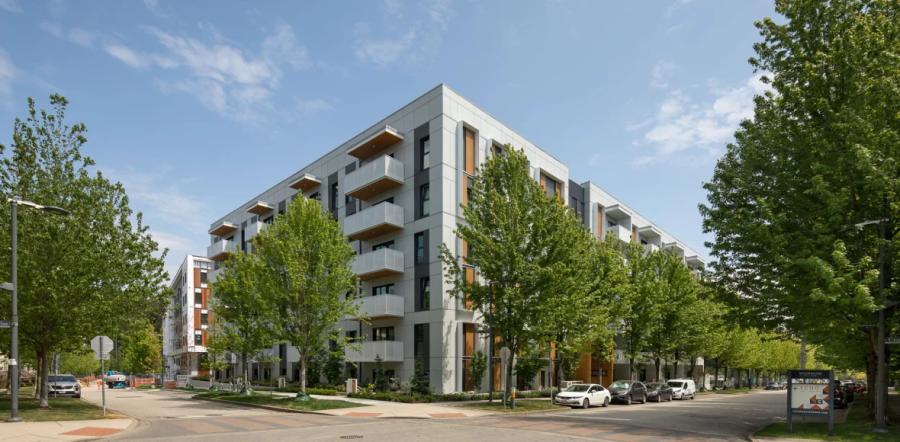
LocationCalgary, Alberta
project
 Project · 03
LocationWest Vancouver, British Columbia
project
 Project · 04
LocationOsoyoos, British Columbia
project
 Project · 05
LocationVancouver, British Columbia
project
 Project · 06
LocationLangley, British Columbia
project
 Project · 07
LocationUcluelet, British Columbia
project
 Project · 08
LocationWhistler, British Columbia
project
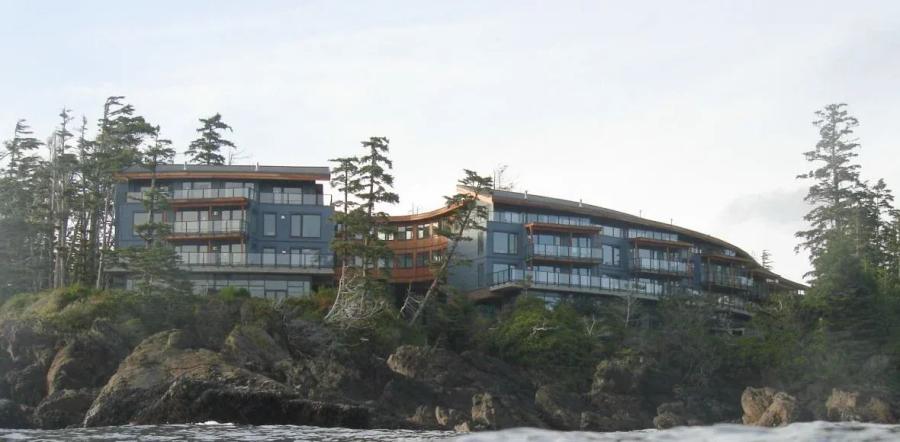
Black Rock Oceanfront Resort shows a Defender system in a hospitality project with oceanfront exposure.
Black Rock Oceanfront Resort · Innotech projectThe certified 88PH+ XI proves the ceiling. The practical 76TS comes from the same manufacturer and testing culture.
The Defender 88PH+ XI is one of only a handful of cold-climate-certified window systems manufactured in North America — certified by the Passive House Institute at efficiency class phA.
Source: PHI component database, certs #1793 / #2030
No measurable air leakage through the assembly at test pressure.
0.00 CFM/ft²
Window styles compared
Choose another style, then compare both columns across the same eight criteria.
Scroll sideways for all styles →
| Criterion | Tilt + Turn | Slider | Single/Double Hung | Casement | Awning |
|---|---|---|---|---|---|
| Opening mechanism | ExcellentDual-action: tilts inward from top or opens fully like a door | GoodHorizontal sliding sash(es) | GoodVertical sliding sash(es) | GoodSide-hinged, opens outward with a crank | GoodTop-hinged, opens outward with a crank |
| Seal quality | ExcellentMulti-point compression seals on all sides | PoorFriction seals only, no compression | PoorFriction seals only, no compression | GoodCompression seal on three sides, weaker at hinge side | GoodCompression seal on three sides, weaker at hinge side |
| Security | ExcellentMulti-point locking system around entire perimeter | PoorBasic locks at meeting stile only | PoorBasic locks at meeting rail only | GoodMulti-point locking on one side only | GoodMulti-point locking on bottom edge |
| Ease of cleaning | ExcellentTurn mode allows full access to both sides from interior | FairSome models remove for cleaning, others require exterior access | FairSome models tilt in for cleaning, others require exterior access | PoorExterior cleaning requires reaching outside | PoorExterior cleaning requires reaching outside |
| Maintenance | ExcellentHigh-quality hardware with minimal maintenance required | FairTracks collect debris and require regular cleaning | FairBalance systems may fail over time | GoodHinges and crank mechanisms may require maintenance | GoodHinges and crank mechanisms may require maintenance |
| Noise reduction | ExcellentSuperior compression seals provide excellent sound insulation | PoorLimited sound insulation due to friction seals | PoorLimited sound insulation due to friction seals | GoodGood sound insulation with proper seals | GoodGood sound insulation with proper seals |
| Energy efficiency | ExcellentBest-in-class thermal performance with tight seals | PoorLower thermal performance due to air leakage | PoorLower thermal performance due to air leakage | GoodGood thermal performance with compression seals | GoodGood thermal performance with compression seals |
| Weather resistance | ExcellentExceptional resistance to air and water infiltration | PoorLower resistance to air and water infiltration | FairModerate resistance to air and water infiltration | GoodGood resistance to air and water infiltration | ExcellentExcellent resistance to water infiltration |
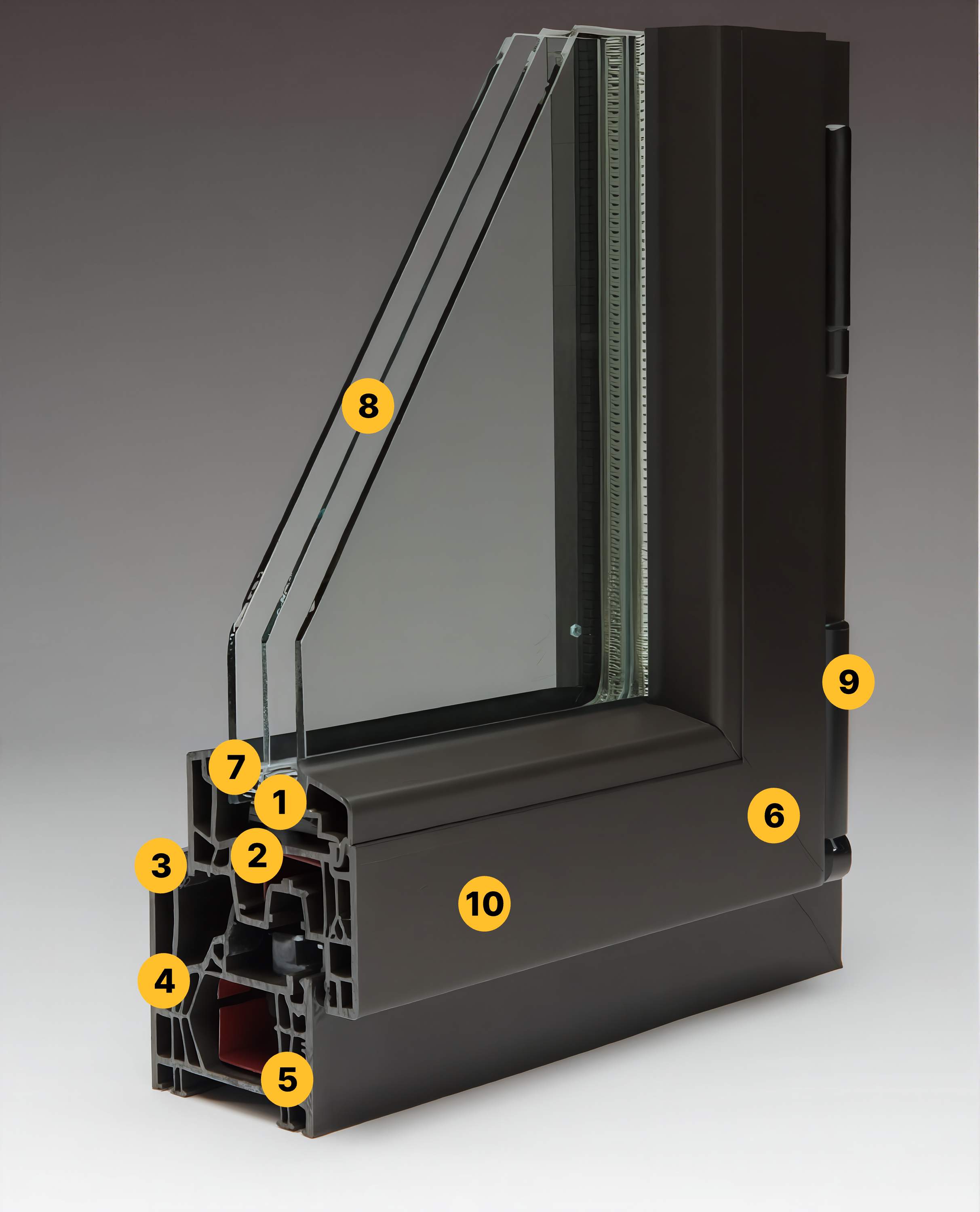
Window anatomy
The parts you never see are the reason the numbers hold. Cross-section, component by component.
The two ratings, in plain language
NFRC measures efficiency: how well a window insulates on the day it is tested. NAFS measures endurance: the complete unit is pressure-tested for air, water, and structural load before it earns a class. At the premium tier, NFRC scores cluster together. The NAFS class is where separation shows. The Defender 76TS carries CW/AW, the classes commercial buildings are held to. Many residential windows test only to R.
NAFS, the North American Fenestration Standard, is a stress test for the complete window unit, not just the glass. It measures air leakage, water penetration resistance, and structural strength under wind load, then assigns a performance class: R, LC, CW, or AW. Where an energy rating describes efficiency on test day, a NAFS class describes how the window holds up over decades of weather.
NFRC ratings measure thermal efficiency: U-factor, solar heat gain, visible light. NAFS measures physical durability: air, water, and structural performance of the whole unit. NFRC tells you how the window performs on day one; NAFS tells you whether it will still perform in year fifteen. A premium window should publish both.
CW (Commercial) and AW (Architectural) are the two highest performance classes under NAFS, typically required for commercial and multi-storey buildings with larger openings and higher wind loads. R is the base residential class. The Defender 76TS carries CW/AW configurations: commercial-grade stress performance in a residential window.
Not necessarily. At the premium tier, NFRC scores cluster within a narrow band, and a marginally better number rarely changes a heating bill in a way you would notice. What separates windows at that level is whether the unit keeps its seal, alignment, and rating over time, which is what NAFS stress-testing measures. Efficiency is the entry requirement; durability is the differentiator.
Each class raises the air-leakage, water, and structural test pressures the complete unit must pass. R is the base residential class; CW and AW are the classes commercial buildings are held to.
| Class | Designed for | In plain terms | Our system |
|---|---|---|---|
| AWHighest | Architectural glazing | The highest class: engineered glazing for demanding architectural work and high-rise exposure. | Defender 76TS configurations |
| CW | Commercial buildings | Commercial-grade: larger openings and higher wind loads than any residential class is asked to take. | Defender 76TS configurations |
| LC | Light commercial | Low-rise commercial buildings and larger residential openings. | — |
| R | Residential | The entry class, intended for houses. Many residential windows are tested only to R. | — |
Classes per the North American Fenestration Standard (NAFS). Product mapping reflects published Defender configurations.
See the full hierarchy first. Open a row only when you want the detail.
Scroll sideways for details →
| Certification | What it means | Our system |
|---|---|---|
| Cold Climate Passive House (PHI)Elite | The most demanding certification for extreme climates — measured airtightness, thermal efficiency, and durability in the cold zone. Only a handful of cold-climate-certified window systems are manufactured in North America; the Defender 88PH+ XI is one of them (PHI certs #1793/#2030). | Defender 88PH+ XI |
| Passive House (PHI)Gold | The gold standard for energy performance: airtight, thermally efficient buildings with rigorous testing and verification requirements. | Defender 88PH+ Pro |
| Net-Zero Energy Ready / NEC Tier 4Building target | A whole-home energy target and the national code's top tier. It sets the performance bar for the complete building envelope. | Defender 76TS |
| National Energy Code Tier 3Silver | Ontario's 2025 requirement for new homes; a significant step up from previous building code. | |
| National Energy Code Tier 2Higher | Moderate energy-performance improvements; not currently adopted in Ontario. | |
| LEED / Built GreenBuilding programs | Whole-building programs with multiple certification levels. The window package is one part of the overall project score. | |
| NEC Tier 1 / Ontario 2025 StandardBaseline | Ontario's current standard as of 2025; the minimum National Energy Code requirement. |
Sources: Haven Haus energy-standards guide; Passive House Institute component database.
Configure
Ten decisions, made together in order — from the system series to the handle in your hand.
Built around the project
Choose the path closest to your project. The useful detail opens without sending you to another page.
Homeowners
Tell us about the openings, priorities, and budget.
Builders & contractors
Get the records and coordination needed to price and install.
Architects & energy teams
Compare configuration-specific values and certifications.
Begin here
Tell us about the house, the openings, and what matters most. We’ll help define the right Defender package.
Virtual showroom